

For years, I have worked with people who see Manhattan skylines not just as a view, but as a statement. Luxury real estate in New York City is more than glass, stone, and elevator doormen. It is an investment territory where the right numbers tell you if a property is a crown jewel—or a costly mistake. In my experience, mastering these metrics provides a clear path in a very sophisticated market. Here, I reveal the seven metrics I always keep on my radar when guiding clients at Azimuth Realty through the world of high-end NYC property investment.
Gross rental yield: What is the income percentage?
If you are like many investors I have known, you want a clear sense of what your property can return annually. Gross rental yield gives you that pulse. It’s not complicated: Take your annual rental income, divide it by the property’s purchase price, then multiply by 100 for a percentage.
- If a $4 million condo earns $120,000 in rent each year: $120,000 ÷ $4,000,000 × 100 = 3% yield.
- This is your first snapshot of potential performance, before counting expenses.
In New York luxury markets, yields can seem low compared to other places, but sometimes that’s the price of security and prestige. I always say: Context is everything. High-end properties tend to have lower gross yields, as their value may rise faster than rents in some years.
Securing steady rental income starts with understanding gross yield.
Net operating income: What do you really earn?
The gross yield is only a door in. Net Operating Income (NOI) takes you deeper. It subtracts your property’s operating costs—maintenance, property taxes, insurance, management fees—from your annual income. What remains is what you can reasonably expect to pocket before paying the mortgage or taxes.
Investors sometimes get caught up in potential rents and forget the sometimes hefty maintenance fees, especially in pre-war or high-amenity condos. My advice? Always project these ahead and track how expenses can shift with inflation or regulation.
Cap rate: A true investment comparison
I reach for the capitalization rate (cap rate) when I want to compare properties on dollars and sense, not hype and polish. The cap rate is calculated by dividing NOI by the total property price, then multiplying by 100.
- If NOI is $100,000 and the property cost $2 million: $100,000 ÷ $2,000,000 × 100 = 5% cap rate.
- Cap rates in Manhattan’s high-luxury sector often run from 2% to 4%—ownership is often a hedge, not a cash cow.
The cap rate is a quick way to put luxury properties on a common scale, especially when considering other investment-grade assets.
Price per square foot: The city’s universal yardstick
I have never met a serious NYC investor who does not keep price per square foot front of mind. It allows you to compare apartments, penthouses, and brownstones, no matter their size or style. This metric exposes how much space you get for your money and can pinpoint undervalued listings—or show you where the market is simply overheated.
 It is not uncommon for Manhattan luxury condos to fetch over $3,000 per square foot, while outer-borough gems might trend less than half that. Knowing the neighborhood averages is as vital as knowing the property itself.
Curious about how upscale values and trends shift? The luxury real estate blog section dives more into this metric's ongoing story across neighborhoods.
Absorption rate: How fast is inventory moving?
Luxury apartments do not sell overnight; sometimes, that’s by design for the sake of discretion. But in my experience, the absorption rate tells a revealing story about demand and supply balance. The metric measures how many months it would take to sell all current listings at today's pace, assuming no new inventory enters the pool.
- If inventory sells out in 3-5 months, that signals strong demand and potential for appreciation.
- When inventory stretches beyond 8 months, buyers may have room to negotiate, but sellers might have to adjust pricing strategies.
I often look to the absorption rate to spot soft or tightening market periods. Azimuth Realty clients appreciate when I pair this with focused neighborhood analysis for smarter timing.
Occupancy and vacancy rates: How dependable is rental income?
All the gloss on Park Avenue means little if your unit stands empty. Whether you buy for rental yield or personal enjoyment, occupancy rate matters. High occupancy means rents keep flowing. High vacancy means costly downtime. In Manhattan, high-end units can have seasonal swings, depending on corporate or international demand cycles.
Rent received is always better than rent projected.
Tracking these rates lets you answer if a building’s glamor aligns with real financial reliability. I like to review data from investment analysis articles for sharper insights on these trends and their causes—especially after economic shocks or policy changes.
Appreciation trends: Will your asset grow in value?
Everyone dreams of the breathtaking resale. I’ve seen appreciation turn a beautiful address into generational wealth—but not always evenly. Some Manhattan micro-markets skyrocket, while others crawl or stall for years. To understand appreciation, I always review:
- Historic sale prices and recent comps in the building or block.
- Upcoming developments or rezoning plans nearby.
- Economic conditions that boost or drag luxury value.
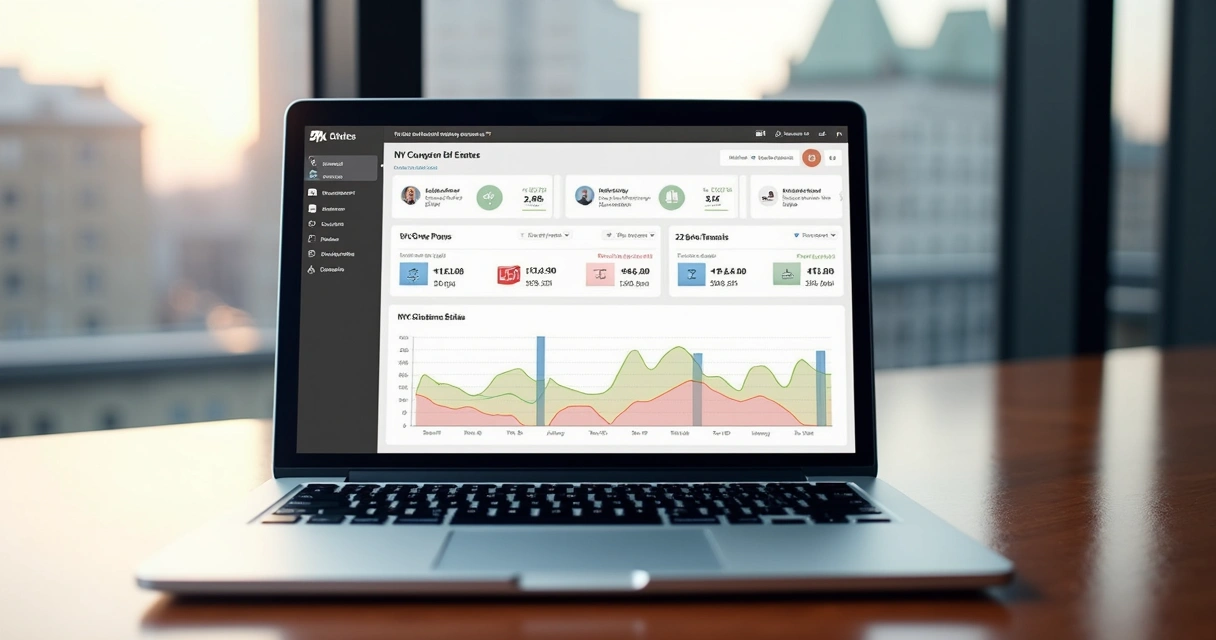
It’s all about adding probability to your purchase, not just possibility. The best part? With the Azimuth Realty digital management platform, tracking long-term appreciation data and forecasting is more accessible than ever.
 Want deeper market context about value trends and forecasts? The market insights resource reveals detailed analytics and sector shifts.
Liquidity and days on market: How easy is it to sell?
Sometimes life—or opportunity—changes fast. That’s why I always watch how long comparable luxury units stay listed before they sell. Liquidity can be a make-or-break factor, especially for larger, unique, or ultra-premium properties. Tracking average days on market helps gauge how smoothly you could exit, should you need to.
- Premium penthouses often take longer than more common units to find the right buyer.
- Shorter average marketing times reflect solid demand and typically higher resale pricing potential.
Stories and case studies on this topic can be found in examples like this recent sales analysis or unique off-market closing stories shared by our team.
Conclusion: Metrics steer success in NYC luxury real estate
Luxury real estate investment in New York City can appear mysterious from the outside. But over time, I have seen clarity emerge through steady attention to these seven metrics. They form a powerful toolkit: gross rental yield, net operating income, cap rate, price per square foot, absorption rate, occupancy/vacancy, and liquidity. Using these with expert guidance, technology, and a little data-driven discipline turns big investments into smart ones. If you are ready to strengthen your next move or want to see our innovative management tools firsthand, get in touch with Azimuth Realty and discover what informed luxury investing can feel like.
Frequently asked questions
What are the key metrics for luxury real estate?
The key metrics are gross rental yield, net operating income, cap rate, price per square foot, absorption rate, occupancy/vacancy rates, appreciation trends, and liquidity as measured by days on market. These numbers help investors make better decisions in high-value markets like NYC.
How to evaluate luxury property investment in NYC?
I always suggest starting with market data: compare price per square foot and cap rates to local averages, check absorption and vacancy rates for supply-demand balance, and use historic appreciation trends. Assess nearby developments and neighborhood changes as well. Bringing in an experienced partner like Azimuth Realty can provide the tech tools and insights to move from raw numbers to confident choices.
Is it worth investing in NYC luxury homes?
For many global investors, NYC luxury properties offer a mix of long-term value, prestige, and stability that is difficult to match elsewhere. While yields may be lower than in more speculative markets, the potential for appreciation and the city’s global appeal keep this market attractive over time.
Where to find the best luxury apartments in NYC?
Prime neighborhoods include areas like Tribeca, the Upper East Side, Central Park South, and emerging pockets in Brooklyn. I often recommend seeking representation with agencies that have access to both listed and off-market inventory, much like Azimuth Realty. This approach helps uncover unique apartments with exceptional upside.
How much do luxury properties cost in NYC?
Current prices for luxury properties vary by area and building, but you can expect Manhattan condos to start around $2,500 to $3,000 per square foot, with ultra-prime units exceeding $10,000 per square foot in rare cases. Full-floor penthouses and trophy townhouses often reach eight figures. For detailed pricing trends, consult updated data from a trusted source or broker active in these segments.